When selecting a 2-inch PVC diverter valve, durability, compatibility, and maintenance requirements matter. This guide reviews top 2″ PVC and CPVC diverter valves widely used in pool, spa, heater, and salt-chlorine systems. We compare sealing, material quality, and flow capabilities to help you pick a model that stays reliable over years of use.
Summary of selected products:
| Product | Brand | Key Benefit | Material | Notes |
|---|---|---|---|---|
| Three Port Diverter Valve | Pentair | Maintenance-free seal | PVC/CPVC | 2″ PVC pipe compatibility |
| 3-Way Positive Non-Lube Valve | Ussuray | Never-lube design | CPVC/PVC | Handles up to 170 GPM |
| 2-Way Posi-Close Slip Valve | FibroPool | Lubeless operation | CPVC | 2″ slip ports |
| 2-Way Diverter Valve | FibroPool | Positive seal | CPVC | 2″ inline valve |
| 3-Port Diverter Valve | Bzsunway | Flexible port control | PVC | 3-port with wide application |
Pentair 263028 Three Port Diverter Valve with 2″ PVC Pipe
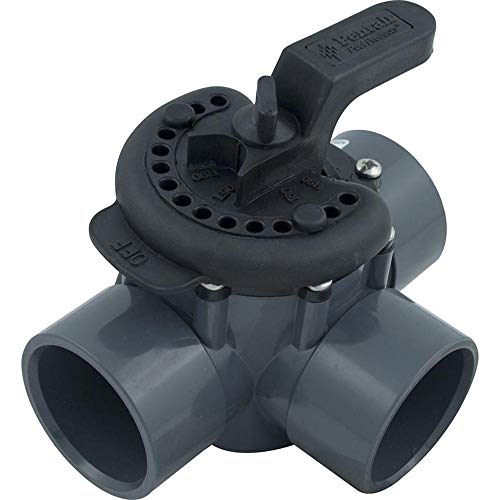
The Pentair 263028 diverter valve is built for pool and equipment applications requiring a three-port arrangement. It offers a maintenance-free Teflon-coated diverter seal for a positive, leak-free seal across varied temperatures. The valve is compatible with PVC piping and can be selected in CPVC for chemical resistance. This model is designed to handle typical flow requirements while maintaining reliability in automatic pool and spa control systems. Installation compatibility with standard 2″ PVC pipes makes it a common choice for retrofit projects.
2 Inch 3 Way Positive Non-Lube Diverter Valve Replacement

This 2″ three-way valve from Ussuray is designed for non-lubricated operation, supporting 263028-compatible ports and standard 2″ pipe slips. It is constructed from CPVC and PVC, delivering durability under chemical exposure and temperature swings common in pool systems. The valve handles high flow rates—up to about 170 GPM—while maintaining a tight seal and minimal head loss. It is particularly suitable for heaters, chemical dispensers, and salt generation setups where reliable, maintenance-free performance matters.
FibroPool 2-Inch 3-Way Posi-Close Slip Valve

FibroPool’s 2″ 3-way Posi-Close valve uses slip ports and CPVC construction for temperature and chemical resistance. Its positively sealing PTFE seats function without external lubricant, delivering smooth operation and a reduced maintenance burden. The 2″ pipe connections glue directly into the valve, which helps create a secure and leak-resistant plumbing arrangement for pools or spas. This model is well-suited for installations requiring a clean, lubeless design with robust durability over time.
FibroPool Diverter Valve – 2 Inch 2 Way

This FibroPool 2″ Posi-Close inline valve provides a two-way path with a positive seal and lubeless PTFE seats. Its CPVC construction offers resilience against temperature fluctuations and chemical exposure, making it suitable for pools, spas, and related equipment like heaters or chemical dosing systems. The design favors serviceability without needing extra grease, reducing maintenance concerns for routine valve operation.
Bzsunway 3-Port 2″ Diverter Valve

The Bzsunway 3-Port diverter provides a flexible configuration with one inlet and two outlets, allowing you to control water flow to multiple lines. It’s designed for broad applicability, including indoor plumbing and pool systems. The valve is engineered to be downgraded or replaced easily when maintenance is needed, and its PVC construction supports standard 2″ pipe fittings. This model can simplify piping layouts where multiple outlets must be managed from a single valve.
Pentair 263029 Grey/Black Diverter Valve 2-Way 2-Inch

Another Pentair option, the 263029 provides a 2-way, 2-inch diverter with 2-1/2-inch slip outside fittings. It carries the brand’s reputation for reliability and a maintenance-free design feature, including a Teflon-coated diverter seal. The valve’s PVC construction aligns with common pool plumbing, enabling predictable performance in spa and pool installations without frequent seal replacement.
Pentair Diverter Valve, 2″ Spigot x 1-1/2″ Slip

This Pentair model emphasizes a 2″ spigot to 1-1/2″ slip configuration across a 3-way valve setup. It facilitates compact plumbing layouts while maintaining a robust positive-seal performance. The product line typically features CPVC or PVC options and a design focused on dependable operation in automated pool controls, heaters, and related equipment.
Buying Guide: Key Purchase Considerations
- Flow capacity and port configuration: Assess whether a 2-port or 3-port design best fits your system, along with expected flow rates (GPM) and pressures (PSI). Higher flow requirements may benefit from CPVC variants for chemical resistance.
- Material compatibility: PVC vs CPVC matters for chemical exposure, temperature range, and long-term durability. CPVC generally handles harsher chemistries and higher temperatures.
- Seals and maintenance: Look for lubricants-free seats or Teflon-coated seals for reduced maintenance. A positive-seal design minimizes leakage and ensures consistent valve operation.
- Connection type: Slip vs spigot connections affect installation. Choose models that match your existing pipes and fittings to minimize adapters and leaks.
- Application context: Heaters, saltwater systems, or chemical dispensers place different demands on valves. Some models are optimized for automatic control systems, while others prioritize simple manual operation.
- Durability and serviceability: Consider valves with easily replaceable seats or seals and robust bodies to extend service life in outdoor or chemically active environments.
- Maintenance expectations: Lubeless designs and corrosion-resistant materials reduce the need for grease and refitting, offering lower ongoing maintenance.
- Installation environment: Indoor plumbing, above-ground pools, and spa plumbing each pose different space and access constraints; verify the valve’s footprint and mounting options.
Selecting the right 2″ PVC diverter valve involves balancing compatibility, durability, and maintenance. Cross-check your system’s pipe sizes, chemical exposure, and operating temperatures to ensure the valve you choose delivers consistent flow control and a long service life.