Whether you’re upgrading a drivetrain or performing routine maintenance, removing a rear sprocket requires the right tools and a clear technique. This guide highlights five reliable tools that handle freewheels, lockrings, and cassettes from major brands. Each tool set is designed to fit common rear hub standards and speeds, ensuring efficient, durable performance for American cyclists.
The following table summarizes the selected products, including key features to help you compare at a glance:
| Product | Brand | Key Feature | Amazon Link |
|---|---|---|---|
| SONZUIA Bike Freewheel Removal Tool and Cassette Lockring Remover Tool | SONZUIA | 12-spline for 5/6/7/8/9/10-speed, 22.6mm freewheel tool, 23.2mm lockring tool | View |
| Oumers Bike Cassette Removal Tool with Chain Whip | Oumers | Includes chain whip and auxiliary wrench; suitable for 7-10 speed cassettes | View |
| Quacc Bicycle Freewheel Remover | Quacc | Carbon steel, compatible with Shimano/Sunrace/Sram/DNP; uses ½” drive | View |
| COTOUXKER Bike Freewheel Removal Tool | COTOUXKER | Complete kit with chain whip and lock ring remover; 7-12 speed support | View |
| YDIAMEJ 5 Pcs Bicycle Cassette Removal Tool Kit | YDIAMEJ | Includes two freewheel tools, chain whip, and auxiliary wrench; 8-10 speed support | View |
Note: This article presents objective information based on listed features. Prices are not included and may vary by seller or time. Use proper safety gear and follow manufacturer instructions when performing sprocket removal.
SONZUIA Freewheel And Cassette Removal Tool

SONZUIA’s tool set centers on a robust carbon steel construction with heat-treated alloy components designed for long service life. The 12-spline freewheel tool supports 5/6/7/8/9/10-speed systems from Shimano, Sun Race, DNP Epoch, Sachs Aris, and other major brands with a 22.6mm diameter. The 12-spline lock ring tool handles popular lock rings with a 23.2mm diameter. This two-piece approach helps cyclists tackle both freewheels and lock rings efficiently, reducing slippage and wear during removal.
Application notes: Use with a compatible ratchet or breaker bar (21mm or ½” drive) for leverage. Always verify hub compatibility before attempting removal, and consider applying penetrating oil if components are rusted or stiff. The tool’s dual compatibility makes it a versatile option for home workshops and professional maintenance alike.
Oumers Cassette Removal Tool With Chain Whip
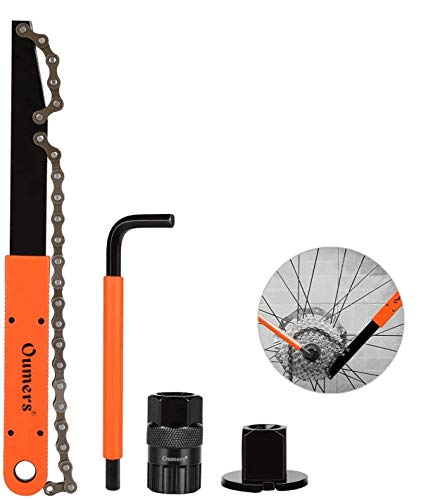
Oumers combines a versatile chain whip with a freewheel/lockring remover and an auxiliary wrench in one kit. It is designed to work with 7, 8, 9, and 10-speed cassettes. A notable feature is the chain whip’s durable finish and comfortable orange-coated handle, which aids control while holding the flywheel in place during removal. The set’s steel construction emphasizes durability for repeated use, particularly on crowded or rusted hubs where extra leverage is beneficial.
Quacc Freewheel Remover Tool

Quacc’s tool is a carbon steel, durable option designed for long-term service. The tool accommodates common brands including Shimano, Sunrace, SRAM, and DNP, making it a practical choice for mixed drivetrain setups. It accepts standard ½” drive ratchets or 21mm spanner wrenches, enabling straightforward operation with common workshop tools. Its sturdy construction reduces the risk of tool deformation under high torque during freewheel removal.
COTOUXKER Freewheel Removal Tool Kit

The COTOUXKER kit provides a complete solution, including a chain whip and lock ring removal components. It emphasizes premium steel construction for durability and resistance to bending, designed to handle a variety of cassette configurations. Compatibility spans 7 to 12-speed cassettes, offering flexibility for many road, mountain, and gravel bikes. This kit is particularly useful for riders who need a bundled set for quick, one-stop maintenance sessions.
YDIAMEJ 5 Pcs Cassette Removal Tool Kit

YDIAMEJ’s 5-piece set combines two freewheel tools, a chain whip, and auxiliary wrenches designed to support 8–10 speed cassettes. The chain whip is built from thick steel with an extended non-slip handle for security and control, helping prevent damage to the sprockets during removal. The tools are heat-treated for durability, and the kit is designed to work with common hub standards, making it a practical entry point for DIY repairs and occasional use by hobbyists and enthusiasts.
Buying Guide: Key Considerations For Choosing A Rear Sprocket Removal Tool
When selecting a tool for bicycle rear sprocket removal, consider the following factors to ensure compatibility, safety, and value:
- Speed range compatibility: Check whether the tool supports 7–12 speed cassettes or freewheels common on your bike. Some tools handle a wider range, reducing future purchases.
- Tool type: Decide between a dedicated freewheel remover, a cassette lockring remover, or a bundled kit with a chain whip. Bundled kits simplify maintenance, especially for beginners.
- Build material and durability: Carbon steel and heat-treated tool steel offer higher durability for frequent use and high torque removal, but may be heavier than lighter alloys.
- Drive compatibility: Look for tools that work with standard drive interfaces (½” drive, 21mm spanner). This affects how easily you can apply torque with common workshop tools.
- Included accessories: Chain whips, auxiliary wrenches, and lock ring tools add value by enabling complete, on-the-spot repairs without hunting for add-ons.
- Brand and support: Reputable brands with clear manuals help ensure correct use and part availability if you need replacements or additional components.
Additional Considerations: Best Practices For Safe Sprocket Removal
- Prepare your workspace with adequate lighting, a stable stand, and a clean, dry surface to prevent slipping or losing small parts.
- Inspect the sprockets, lock rings, and freewheels for wear before attempting removal to avoid tool damage or personal injury.
- Use penetrating oil on stubborn components and apply steady, even torque to prevent slipping and tool breakage.
- Keep track of small parts (spacers, lock rings) during disassembly to simplify reassembly and maintain proper drivetrain alignment.
- Consult manufacturer tolerances if you’re unsure about compatibility with your exact hub model or sprocket type.