Basement humidity can sneak up in cool, damp environments. The following dehumidifiers are selected for basement use, with many offering low-temperature operation, quiet performance, and convenient drainage. This guide highlights models that balance efficiency, capacity, and ease of use for American homes.
style=”display:none”>Summary Table of Chosen Products
| Product | Brand | Approx. Capacity (Pint/Day) | Key Feature | Humid.Control |
|---|---|---|---|---|
| Max 45 oz/Day Dehumidifier for Home 1100 Sq Ft | EasyAcc | 45 oz/day | Low-Temp Dehumidification Tech | Auto Shut Off |
| Dehumidifier, 98 OZ Water Tank, 1000 sq.ft | PSOS | ~40 oz/day | Humid. Monitoring & 7-Color Night Light | Auto Shut Off |
| GoGuess 1600 Sq.ft Dehumidifier | GoGuess | 21 pints/day | 3 Intelligent Modes | Auto Humidity Regulation |
| Trazico 21 Pint Quiet Dehumidifier | Trazico | 21 pints/day | Smart Modes: DEHU/DRY/CONT | Auto Defrost |
| KNKA 1600 sq.ft Dehumidifier | KNKA | 21 pints/day | Smart Touchscreen Controls | Auto Shut Off |
EasyAcc Max 45 oz/Day Dehumidifier For Basement
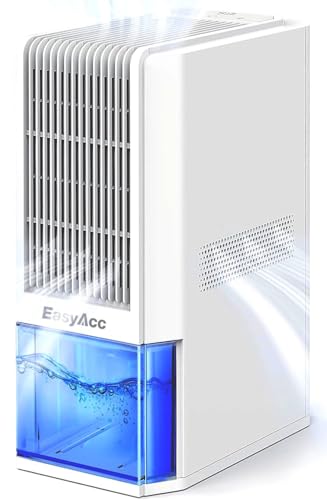
The EasyAcc unit includes dual-semiconductor technology and a 270° intake to extract up to 45 oz (1300 ml) of moisture per day. It is positioned as capable for spaces up to 1100 square feet and is designed for use in bedrooms, living areas, basements, bathrooms, and RVs. Its low-temperature dehumidification tech helps the appliance operate efficiently in cool, damp environments, and an intelligent auto-defrost feature supports year-round use. A large 68 oz/2000 ml tank reduces the need for frequent emptying, while a quiet operation range of 30–45 dB keeps nighttime disturbance minimal. The 7 LED light modes provide ambient options without sacrificing function.
Key points to consider: low-temperature capability helps basement environments stay dry even when temperatures are cooler, and auto shut-off protects against overflow. It combines practical moisture removal with user-friendly features that suit small- to mid-size basements or living spaces adjacent to damp areas.
PSOS Dehumidifier With Humidity Display And Auto Shut Off

This dehumidifier targets compact spaces like basements, bathrooms, and bedrooms with a 98 oz water tank. It emphasizes dual-core high-efficiency dehumidification to extract up to about 40 oz per day, with a humidity monitor to track conditions in real time. Operating at very low noise levels—under 28 dB on some settings—it is suitable for nighttime use. The unit also features auto shut-off and seven color LED night lighting that can be locked to a preferred color, making it both practical and ambient for bedrooms and living spaces near damp areas.
Considerations include the strong emphasis on quiet operation, humidity monitoring, and the versatility of color-changing lighting. While the water tank is moderately large, continuous drainage is optional via hose, which helps in basement setups where uninterrupted dehumidification is desirable.
AEOCKY Max 80 Pint/Day Basement Dehumidifier
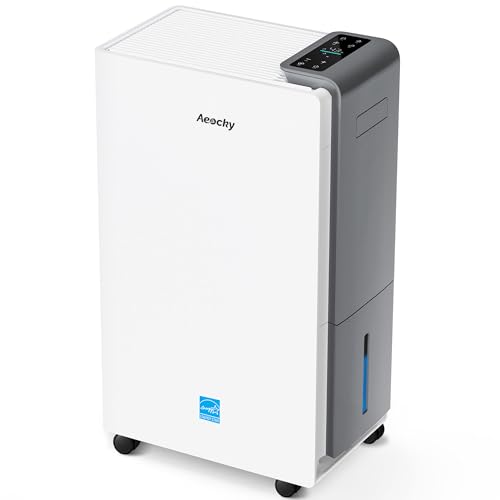
The AEOCKY model is marketed as a high-capacity, energy-efficient option with ENERGY STAR Most Efficient 2025 certification and a claim of strong performance for large basements up to 4500 sq ft. The unit is designed to remove up to 80 pints per day, which is well suited for larger basement spaces or areas with persistent dampness. It emphasizes compressor-driven dehumidification and efficiency, appealing to users seeking robust performance with energy-conscious operation.
Things to weigh include the potential for higher upfront cost versus long-term energy savings, and the importance of proper sizing for your space to avoid over- or under-dehumidification. It’s also important to verify installation needs and continuous drainage capabilities if you plan to run it in a basement long-term.
GoGuess 1600 Sq.Ft Dehumidifier For Basement

The GoGuess unit removes up to 21 pints per day and covers spaces up to 1600 sq ft. It offers three intelligent modes—DEHU, TURBO, and SLEEP—to tailor humidity control and noise levels, with an auto humidity regulation feature that helps maintain target conditions. Drainage is supported via continuous drainage and a timer helps manage daily operation. It’s positioned as a versatile option for basements, living rooms, and RVs where moisture control is needed without constant monitoring.
Pros include flexible modes for different use cases (including faster clothes-drying in TURBO mode) and smart control that adjusts to humidity changes automatically. Potential cons are mid-range capacity for extremely damp basements and the need for proper doors/windows sealing for best results.
Trazico 21 Pint Quiet Dehumidifier For Large Rooms

The Trazico model targets spaces up to 1,500 sq ft, removing up to 21 pints per day under typical testing conditions. It features smart 3-mode operation (DEHU, DRY, CONT), an auto defrost function for cooler basements, and a 24-hour timer for scheduling. Drainage is supported via a hose for continuous operation, or a 1.5 L tank with auto shut-off. This makes it a flexible option for basements, bedrooms, kitchens, and RVs where constant moisture control is desired without frequent emptying.
Strengths include a versatile mode set and defrost capabilities for cool environments. Consider how you plan to drain and the size of your basement to ensure the unit provides steady moisture control without over-drying.
KNKA 1600 Sq.Ft Dehumidifier For Basement

The KNKA unit serves spaces up to 1,600 sq ft and removes up to 21 pints per day. It features smart touchscreen controls for humidity, fan speed, and timer settings, with a quiet operation profile. A sleep mode further reduces noise, making it suitable for bedrooms or quiet living areas adjacent to damp spaces. Continuous drainage is supported via a drain hose, and the unit offers a simple interface for homeowners seeking straightforward moisture control.
Useful considerations include the balance between capacity and room size, and the practicality of the touchscreen controls in dim basements. The sleep-friendly operation helps maintain comfort during night use while keeping humidity in check.
Buying Guide: Key Purchase Considerations For Basement Dehumidifiers
- Basement size and humidity level: Match the unit’s pint/day rating or gallons/day capacity to the space. Larger basements and consistently damp areas benefit from higher capacity units, while smaller basements can be adequately controlled with mid-range models.
- Temperature range: Look for low-temperature or “basement-friendly” dehumidifiers that maintain efficiency in cooler environments (often around 41°F / 5°C or higher). This is critical in unheated or poorly insulated basements.
- Drainage options: Choose between a built-in gravity tank with auto shut-off and continuous drainage via a hose. Continuous drainage is ideal for basements that run the unit for extended periods without manual emptying.
- Noise level: Consider models rated for quiet operation, especially if the basement is adjacent to living spaces or bedrooms. A unit with a low dB rating will be more comfortable for daily use.
- Humidity controls: Digital hygrometers or humidistat-based control help maintain a target humidity range (often 30%–60%). Smart modes and auto-defrost can improve performance in basements with fluctuating moisture.
- Energy efficiency: ENERGY STAR certification or efficient compressor technology reduces running costs—beneficial for basements that run continuously or for long periods.
- Maintenance: Look for washable or reusable filters, simple cleaning procedures, and clear indicators for tank fullness or hose drainage.
- Durability and warranty: A solid warranty protects your investment, especially in cooler, more humid environments where units work harder.
- Placement and airflow: Ensure adequate clearance for air intake and exhaust, with unobstructed passages for even dehumidification across the space.
- What “Most Efficient” means: Some models carry “Most Efficient” designations or energy-performance claims. Verify third-party certifications and compare official energy usage to real-world performance for the space you plan to dehumidify.
In evaluating the options above, consider whether you need a compact unit for a small basement nook or a larger-capacity model for a wide, open basement. Low-temperature operation is a valuable feature for basements that stay cool, while continuous drainage may reduce maintenance. Noise level matters if the space is near living areas, and humidity monitoring helps maintain consistent comfort without over-drying.