Choosing a tankless water heater hinges on energy efficiency, flow rates, and installation flexibility. This guide highlights five top options that balance compact design, reliability, and high efficiency for American homes. Each product profile covers key features, performance, and suitability for different households, from compact spaces to busy families needing steady hot water. Read on to compare options and find the best fit for saving on energy while ensuring reliable hot water supply.
| Product | Brand | Approx. Flow (GPM) | Key Efficiency Feature |
|---|---|---|---|
| RX199iN | Rinnai | Up to 11.1 | UEF .98, Smart Sense control, Versa Vent |
| CZ422NG | ThermoMate | Up to 5 | UEF 0.81, high efficiency copper exchanger |
| 14kW Electric | SIVUATEK | 1–2 points | Self-modulating, up to 99% thermal efficiency |
| RTG-70XLN-3 | Rheem | Up to 7 | High efficiency non-condensing outdoor unit |
| 3500W Electric | ThermoMate | 1 sink | On-demand, energy-saving, space saving |
Rinnai RX199iN Condensing Tankless Water Heater

This indoor/outdoor gas-fired unit offers up to 11.1 GPM with 199,000 BTU input, suitable for larger households. It features Versa Vent compatibility for flexible installation and a Smart Sense gas control system that supports propane or natural gas. The compact design fits tighter spaces while delivering high performance. A Quick Flush option simplifies maintenance, and the unit claims a high energy efficiency factor of UEF .98. WiFi control is available through the Controlr module (not included).
ThermoMate CZ422NG Natural Gas Tankless Water Heater

Designed for indoor residential use with up to 113,000 BTU and a maximum flow around 5 GPM, this unit emphasizes efficiency and safety. It features an energy-smart system with a heat exchanger made from high-quality copper and an advanced flow sensor to maintain stable outlet temperatures. The heater includes multiple protections such as boil-dry, freeze, flame-out, and overheating safeguards. It offers a high 98% thermal efficiency and a UEF of 0.81, helping reduce energy consumption compared to traditional heaters.
14kW Electric Tankless Water Heater (SIVUATEK)
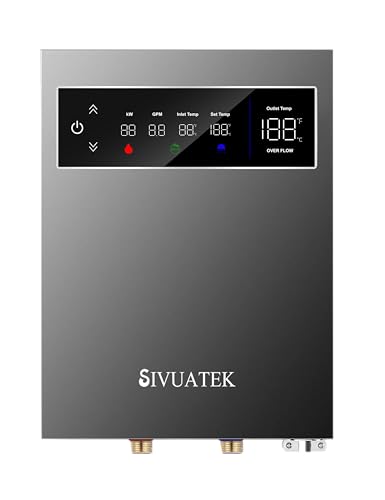
This compact 14kW electric unit delivers instant hot water for 1–2 usage points, such as a kitchen and a bathroom. It requires a 60-amp circuit and 240V supply. The device uses self-modulating power to adjust heat output, reducing energy waste. It boasts high thermal efficiency (up to 99%) and a space-saving, wall-mountable design. It’s suitable for under-sink or compact installations where electric supply matches the required circuit. Installation notes emphasize that it should be wired to meet electrical requirements and local codes.
Rheem RTG-70XLN-3 Outdoor Tankless Water Heater
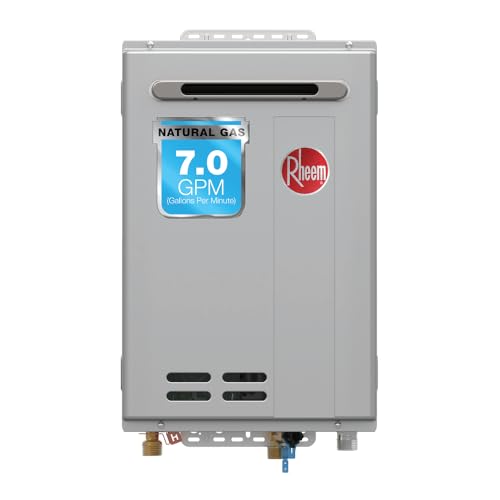
This outdoor unit provides up to 7.0 GPM and 160,000 BTU for reliable hot water across households with multiple needs. As a non-condensing natural gas model, it emphasizes rugged outdoor durability and straightforward installation by a qualified professional. Its compact cabinet is designed for exterior mounting and resistance to weather exposure, with fast recovery during peak demand periods.
ThermoMate 3500W Electric Tankless Water Heater

This small electric unit delivers on-demand hot water for a single sink, with 3500W heating capacity. It operates at 110–120V and requires hard-wiring rather than plugging in. The self-modulating system optimizes power use based on flow and temperature, helping to minimize standby losses. The design emphasizes space savings and flexible mounting options, making it suitable for under-sink installations or compact utility areas.
Buying Guide
Key considerations when selecting an efficient tankless water heater include energy source, installation location, flow requirements, and maintenance needs.
- Energy source and type: Gas units (natural gas or propane) generally offer higher flow at higher demands, while electric units are easier to install in spaces without gas lines but may have lower maximum flow.
- Flow rate and simultaneous usage: Calculate peak simultaneous hot water needs (number of showers, sinks, and appliances) to choose a unit that sustains comfortable temperatures at your required GPM.
- Efficiency metrics: Look for high UEF values and, for gas models, condensing technology that recovers heat to boost efficiency. Digital controls and weather-resistant housings add value for outdoor installs.
- Ventilation and venting options: Condensing models often require specific venting; ensure compatibility with your home and space, especially for outdoor vs indoor installations.
- Electrical requirements: Electric models demand dedicated circuits and appropriate gauge wiring. Verify panel capacity before installing high-way heating units.
- Maintenance and service: Features like Quick Flush, accessible service ports, and warranty terms affect long-term upkeep and total ownership costs.
- Warranty and support: Longer warranties on heat exchangers and components indicate durable design and manufacturer confidence; verify what is covered and for how long.
- Budget versus demand: Higher efficiency units may have higher upfront costs but reduce operating expenses. Balance upfront investment with expected energy savings.
In summary, for homes with significant hot water needs, condensing gas models like the RX199iN offer strong efficiency and high flow, while compact electric models such as the SIVUATEK unit suit spaces with limited gas access. For outdoor installation, non-condensing options like Rheem’s RTG-70XLN-3 provide reliable performance. Always consult a licensed installer to verify venting, gas lines, and electrical requirements before purchasing.