Basement floors face moisture, cracks, and hydrostatic pressure that can lead to costly damage. The right sealer creates a durable, flexible waterproof barrier that protects concrete surfaces for years. This guide reviews five top-rated concrete sealers tailored for basement floors, highlighting how each product addresses sealing, moisture resistance, and long-term durability. The selections balance penetrating and membrane-based approaches to suit different basement conditions and project goals.
Summary of selected products:
| Product | Brand | Type | |
|---|---|---|---|
| RadonSeal Plus Deep Penetrating Concrete Protectant Sealer | RadonSeal | Deep-penetrating sealant | Penetrates up to 4″, reduces moisture and radon, strengthens concrete |
| RadonSeal Plus Deep-Penetrating Concrete Protectant Sealer | RadonSeal | Deep-penetrating sealant | Reduces basement moisture and radon, fortifies concrete |
| Liquid Rubber Basement and Foundation Repair Sealant – 5 Gallon | Liquid Rubber | Flexible waterproof membrane | 900% elongation, superb adhesion, basement and foundation repair |
| Liquid Rubber Basement And Foundation Repair Sealant – 1 Gallon | Liquid Rubber | Flexible waterproof sealant | Same membrane approach in a smaller package, versatile |
| Rust-Oleum 301239 Concrete Moisture Stop Fortifying Sealer | Rust-Oleum | Fortifying sealer | Seals and strengthens concrete, prepares for coatings |
RadonSeal Plus Deep Penetrating Concrete Protectant Sealer

RadonSeal Plus Deep Penetrating Concrete Protectant Sealer is designed to penetrate up to 4 inches, blocking water, vapor, efflorescence, and radon gas in concrete surfaces such as basement floors and walls. It hardens concrete to reduce dusting and damage from salts or freeze-thaw cycles. The water-based formula carries ZERO VOCs and is suitable for indoor use with minimal odor. This product emphasizes internal protection by reinforcing the concrete matrix, making it a solid choice for long-term basement durability.
RadonSeal Plus Deep-Penetrating Concrete Protectant Sealer
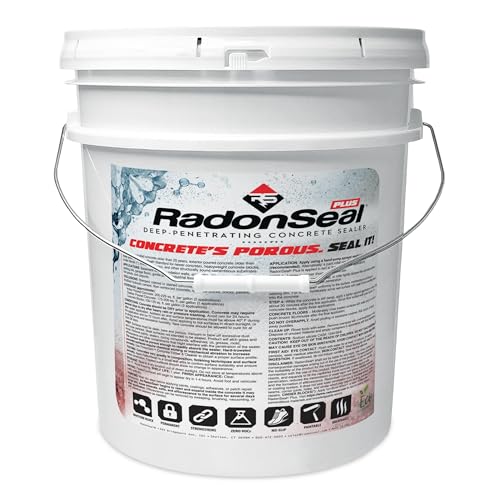
This variant concentrates on protection by penetrating deep into concrete to reduce moisture transfer and radon intrusion. It strengthens against damage from salts and de-icers, making it well-suited for basements in climates with freeze-thaw cycles. The product’s deep penetration helps create a barrier that is less likely to peel or wear with time, offering a durable solution for basement walls and floors.
Liquid Rubber Basement And Foundation Repair Sealant – 5 Gallon

Liquid Rubber’s Liquid Rubber Basement and Foundation Repair Sealant forms a permanent waterproof membrane that provides 900% elongation. It seals against active leaks and moisture, and it works well with self-leveling concrete applications. The coating remains flexible across temperature changes and adheres to concrete, masonry, wood, metal, and foundation surfaces, offering a robust solution for basement leak and foundation repair tasks.
Liquid Rubber Basement And Foundation Repair Sealant

This 1-gallon variant repeats the same high-flexibility, waterproof coating, suitable for smaller projects or spot repairs around basement walls, cracks, or joints. Its seamless compatibility with other concrete products helps create a comprehensive waterproofing approach for mixed basement surfaces, including cracks, pores, and foundation contacts.
Rust-Oleum 301239 Concrete Moisture Stop Fortifying Sealer
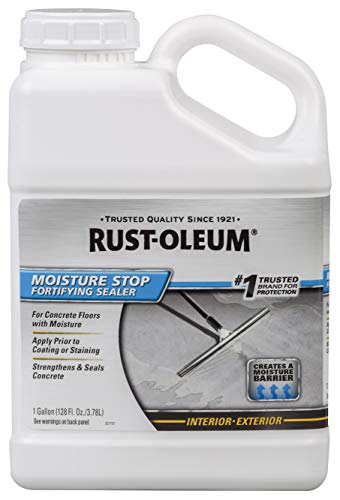
Rust-Oleum’s Concrete Moisture Stop Fortifying Sealer is designed to seal concrete floors and prevent moisture from seeping through to coatings and finishes. It bonds to the surface without altering appearance and penetrates within 45 minutes, covering up to 200 square feet per gallon. This option focuses on preparing basement floors for subsequent coatings or paints by reducing moisture transmission and improving surface integrity.
Buying Guide
Choosing the right sealer for basement floors depends on moisture level, substrate condition, and desired maintenance routine. Key considerations include:
- Penetration vs. membrane: Penetrating sealers reduce moisture intrusion inside the concrete matrix, while membranes create a continuous barrier on the surface. Deep-penetrating options are often best for blocky or highly porous basements, whereas membrane sealants perform well where active leaks exist.
- Flexibility and elongation: Sealers with high elongation accommodate concrete movement and temperature fluctuations, reducing cracking and peeling over time.
- VOC content and odor: Indoor basement work benefits from low-VOC, low-odor formulas to minimize health concerns during application and curing.
- Compatibility with coatings: If you plan to apply floor coatings or paints later, choose sealers that promote adhesion and do not compromise topcoats.
- Application method and coverage: Some products require spray or roller application and provide coverage estimates per gallon. Consider project size and tool availability when choosing.
- Environmental and safety features: Water-based, environmentally friendly formulations reduce fumes and environmental impact while maintaining performance.
To support informed decisions, compare products based on penetration depth, expected durability, and suitability for indoor basement environments. For broader basement waterproofing, consider pairing a penetrating sealer with a surface membrane on known leakage paths, or consult a waterproofing professional for complex hydrostatic conditions.