Power reliability is essential for a home around 3,000 square feet. This guide highlights top generators and power stations that balance efficiency, durability, and ease of use. From portable gas generators to compact solar-and-gas hybrids, these options cover essential loads during outages, camping, or RV adventures. Each entry includes core specs, typical use cases, and how it serves a 3,000-square-foot home’s backup needs while staying within reasonable noise and fuel use. The goal is to help you choose a dependable, safe solution for your household energy needs.
Summary of selected products
- Oxseryn 4400-Watts Inverter Generator — Gas-powered, RV-ready, inverter tech for clean power.
- DABBSSON 2048Wh Portable Power Station — Lightweight LiFePO4 model with multiple outlets and high-cycle life.
- Honda EU3000IS1AN 3000-Watt Inverter Generator — Quiet, efficient, CO-MINDER safety feature.
- LIFAN 3500W Portable Inverter Generator — Compact, quiet, and suitable for home backup with ECO mode.
- Westinghouse 12500 Watt Dual Fuel — Large home backup with multiple outlets and transfer-switch readiness.
Oxseryn 4400-Watts Inverter Generator
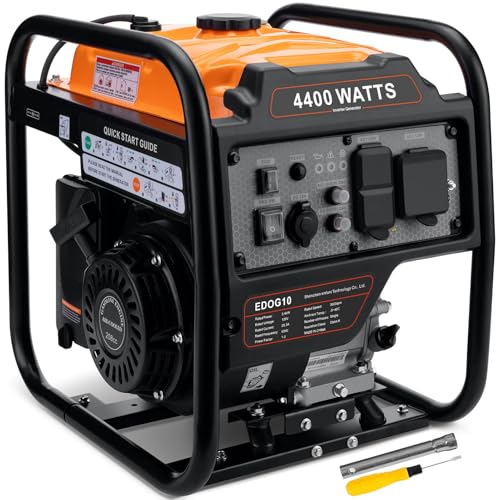
Overview: This gas-powered inverter generator delivers 4400 peak watts and 3400 running watts, with clean sine-wave output suitable for sensitive electronics. It includes 2×120V AC ports, a 30A RV outlet, a 12V DC port, and a 14-hour runtime at quarter load. Features such as ECO mode, low oil shutdown, cold start technology, and overload protection help maintain reliability during outages or remote work scenarios. It’s RV-ready and EPA compliant, making it versatile for home backup and recreational use.
Relevance to a 3,000-square-foot home: The Oxseryn model provides ample running watts to cover essential circuits and appliances during a power outage. Its inverter technology ensures stable power for electronics like computers, routers, and medical devices. The 2-gallon tank and 14-hour runtime support extended outages, while the RV-ready outlet adds flexibility for outdoor power needs or tighter fueling options in certain setups.
Notes on operation: Expect a balanced combination of portability and power. The unit’s noise level is typical for open-frame inverter generators, and its ECO mode helps conserve fuel at light loads. The unit’s protections help reduce risk during temporary outages or lower-use scenarios in a home backup plan.
DABBSSON 2048Wh Portable Power Station
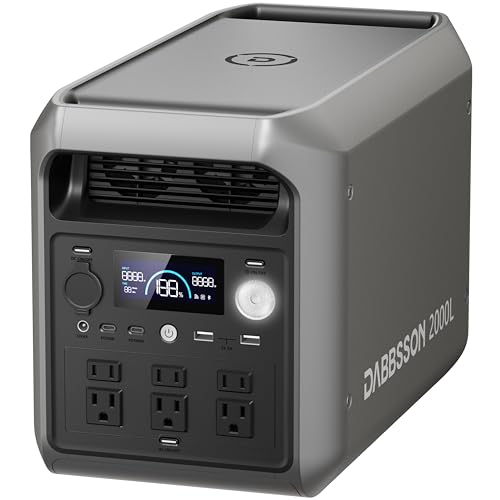
Overview: This semi-solid LiFePO4 power station stores 2048Wh with a 2200W continuous output and P-Boost up to 3300W. It weighs 41 pounds and features six AC outlets, multiple USB ports, a car port, and DC outputs. Its AI-driven BMS and 2048Wh capacity offer longer runtimes with 4000+ charge cycles, making it a durable home backup or off-grid option. The design emphasizes safety with UL94-V0 housing and multiple protection layers, including thermal management.
Relevance to a 3,000-square-foot home: While not a gas generator, this portable power station can run essential electronics, lighting, and small appliances for extended outages. It serves well as a primary or supplementary backup for critical circuits and devices, particularly in households seeking clean energy storage and quiet operation indoors or in modest outdoor setups.
Notes on operation: Consider pairing with solar charging or a household load-management plan. The device supports multiple devices simultaneously and helps reduce the need to run a larger, noisier generator for shorter outages.
Honda EU3000IS1AN 3000-Watt Inverter Generator

Overview: The Honda EU3000IS1AN delivers 3,000 starting watts and about 2,800 running watts. It features a 3.4-gallon fuel tank with a runtime around 10 hours at half load, and a Honda GX200 engine. Noise level is relatively quiet at typical operating distances, around 57 dBA at 23 feet, with CO-MINDER as a safety enhancement.
Relevance to a 3,000-square-foot home: This generator is sized for typical home backup requirements, including essential circuits and some high-priority appliances. Its quiet operation and Honda reliability make it a strong candidate for everyday home use, especially in neighborhoods with noise restrictions or close living quarters.
Notes on operation: Regular maintenance and proper ventilation are essential. The CO-MINDER feature helps reduce risk with carbon monoxide mitigation, aligning with safety-focused backup planning for mid-sized homes.
Honda Power Equipment EU3000IS 3000W

Overview: This model offers 3000W of output and up to 20 hours of run time on a full 3.4-gallon tank in efficient operation. It emphasizes reliability and fuel economy, with features designed to support routine home backup tasks and remote sites where long runtimes matter.
Relevance to a 3,000-square-foot home: The 3000W class is well-suited for typical essential loads in a mid-sized home during a power outage. Long runtimes and Honda’s reputation for durability help ensure steady performance through extended outages or camping scenarios aligned with home energy resilience goals.
LIFAN 3500W Portable Inverter Generator

Overview: The Lifan unit provides 3000W rated and 3500W peak power with a low THD of under 3%, making it safe for sensitive electronics. It operates at a quiet 62 dB, with an ECO mode to optimize efficiency. The unit weighs around 46 pounds and includes a built-in handle for portability, making it convenient for home backup or outdoor use.
Relevance to a 3,000-square-foot home: This generator balances power and portability, delivering enough wattage for core home loads while maintaining sound levels suitable for residential areas. ECO mode helps conserve fuel, which is advantageous during longer outages or frequent use in outages.
Notes on operation: Pair with a proper transfer switch plan or power management to maximize efficiency and safety for a home backup configuration.
ZEGJAW 2400-Watt Portable Inverter Generator

Overview: The ZEGJAW 2400i provides up to 2400W continuous power with stability at 1800W for normal use. It weighs about 39.7 pounds and operates at a quiet 62 dB at 23 feet. The device includes a power panel with multiple indicators, ECO mode, and USB/AC outputs, plus a grounding terminal and grid-connected output socket.
Relevance to a 3,000-square-foot home: This model is ideal for smaller essential loads or as a supplementary unit in a larger backup plan. Its compact size and quiet operation suit urban or suburban settings where space and noise are considerations for a 3,000-square-foot home.
Notes on operation: Consider load management to keep within its continuous output range while ensuring critical devices have power during outages.
Westinghouse 12500 Watt Dual Fuel Home Backup

Overview: This dual-fuel generator offers 12500 running watts (gasoline) or 11200 peak watts (propane) with up to 12 hours of runtime on a six-and-a-half-gallon tank. It includes remote electric start, transfer switch readiness, and a suite of outlets including RV, 120V, and 30A configurations. The rugged design supports sustained home backup with safety features like rubber outlet covers and an hour meter.
Relevance to a 3,000-square-foot home: For larger homes or tighter load profiles, this model provides robust power for whole-house backing during outages, especially when paired with a transfer switch and proper electrical planning. It can support HVAC, refrigerators, sump pumps, and other critical systems when designed into a whole-house solution.
Notes on operation: Given the high wattage, professional installation is recommended to ensure safe integration with home electrical systems and local code compliance. Fuel management and venting are essential for safe operation.
Buying Guide: Key Considerations For A 3,000 Square Foot Home
- Load requirements: Start by listing essential circuits (refrigeration, sump pump, heating, cooling, lighting, medical devices). Choose a generator with continuous wattage that comfortably covers these essentials, plus a buffer for startup surges. For many three-thousand-square-foot homes, a mix of 3000–5000 running watts or a dual-fuel/portable-to-station option can offer the best balance.
- Fuel type and availability: Gasoline generators are common but require storage and venting considerations. Propane and dual-fuel units provide longer shelf life and flexibility. For extended outages, pairing a solar charging option with a battery-based station or a larger generator can be advantageous.
- Noise and neighborhood impact: Inverter generators typically produce less noise and offer cleaner power for sensitive electronics. If you live in a neighborhood with noise restrictions, prioritize quiet operation (often under 60 dB at distance) and consider ECO modes.
- Electrical integration: Determine whether you’ll use a transfer switch, a power transfer panel, or a manual interlock. This affects safety and how seamlessly the generator powers essential circuits without backfeeding the grid.
- Portability vs. capacity: Portable units are easy to move and store but may require manual setup for use with a home panel. Larger home standby or dual-fuel units deliver more power and reliability but require dedicated installation and space.
- Maintenance and longevity: Look for engines with reputations for reliability (Honda, Westinghouse, Lifan), and units with features like automatic low oil shutdown and CO detectors. Battery-based units should have a long cycle life and robust BMS protections.
- Safety features: CO sensors, low-oil shutdown, automatic shutoff, and proper ventilation are essential. Ensure safe operating procedures and clear instructions accompany any backup plan.
When planning for a 3,000-square-foot home, consider a layered approach: a primary inverter or portable generator for essential loads, plus a larger capacity unit or a dual-fuel system for heavier demand or longer outages. Combine with a transfer switch and a smart load-management strategy to maximize efficiency and safety during power interruptions.