Choosing a dependable one-way gas check valve helps prevent fuel backflow and protects your fuel system. This guide highlights top-rated inline check valves from trusted brands, featuring durable materials, corrosion resistance, and reliable one-way operation. Read on to compare specifications, installation notes, and performance characteristics to find the right valve for diesel, gasoline, or other fluids in low-pressure systems.
| Brand | |
|---|---|
| EVIL ENERGY | 3/8″ Fuel Check Valve Inline (10 mm OD) – Black |
| EVIL ENERGY | 5/16″ Fuel Check Valve Inline (8 mm OD) – Silver |
| EVIL ENERGY | 1/4″ Fuel Check Valve Inline (6 mm OD) – Silver |
| Litoexpe | 5/16″ One Way Inline Check Valve – PVDF |
| Vigorighter | 1/4″ Fuel One-Way Check Valve – Aluminum |
The products featured below represent common sizes and materials used in low-pressure fuel lines. Each entry includes a brief overview of the construction, operating range, and flow direction control features to help you select a valve compatible with your system.
EVIL ENERGY 3/8″ Fuel Check Valve Inline
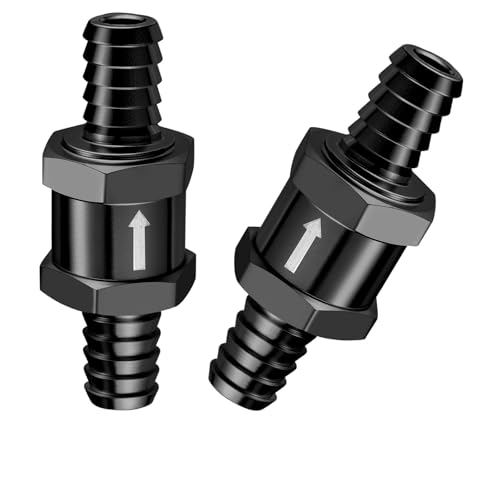
Specifications cover 3/8 inch (10 mm) outer diameter with a low opening pressure of 0.2 bar (2.9 psi) and a wide operating range up to 6 bar (87 psi). Made from 6061-T6 aluminum alloy and black anodized for corrosion resistance, this valve uses a stainless steel spring to permit flow in one direction only. It prevents backflow and helps maintain stable system pressure, suitable for both gasoline and diesel lines. Operating temperature ranges from -22°F to 266°F, making it versatile for many environments.
The valve is designed for reliable inline installation with a focus on durability in fuel or coolant circuits. Its aluminum construction provides strength while staying lightweight, and the one-way mechanism reduces pump wear and backpressure fluctuations. When choosing this model, confirm compatible hose ID and hose clamps to ensure a tight seal without leaks.
EVIL ENERGY 5/16″ Fuel Check Valve Inline

This 5/16 inch (8 mm) OD valve mirrors the same performance envelope as the 3/8″ model, with a minimum upstream pressure of 0.2 bar and a working range of 0.2–6 bar. It uses a black anodized aluminum body to resist corrosion and wear, and a stainless steel spring to ensure one-way flow. Operating range includes typical automotive and small engine fuel circuits, where preventing backflow is critical for consistent pressure and fuel delivery. The included stainless components aid long-term durability in challenging conditions.
When installing, verify hose compatibility and ensure clamps are used to prevent leaks. This model is well-suited for carbureted engines, small fuel lines, and systems where a compact inline valve is preferred for space efficiency.
EVIL ENERGY 1/4″ Fuel Check Valve Inline

At 1/4 inch (6 mm) OD, this compact valve provides similar specifications: 0.2 bar minimum upstream pressure, 0.2–6 bar working range, and -22°F to 266°F operating temperatures. The aluminum alloy body is black anodized, and it uses a stainless steel spring to maintain unidirectional flow and stable pressure. It is appropriate for tight-fit installations in smaller fuel lines and low-pressure circuits. As with other EVIL ENERGY valves, ensure proper hose sizing and clamps for a leak-free connection.
This valve is a practical choice for applications where space is at a premium or for retrofits of older engines with miniature fuel lines. The consistent one-way behavior helps protect pump seals and downstream components from backpressure problems.
5/16″ One Way Inline Check Valve – PVDF

This model features PVDF plastic construction with a one-way quick-seal diaphragm and silicone rubber for the diaphragm material. It supports up to 137°C environments and is designed for corrosion resistance in fuel, water, or chemical lines. The nozzle design includes a pagoda-shaped groove to improve airtightness and adsorption performance, making it suitable for fluid systems that require reliable backflow prevention without introducing leaks or friction losses. It’s a versatile option for PVDF-compatible lines and corrosive environments.
Note that PVDF valves may differ in stiffness and response to heat compared with aluminum valves. Install with proper clamps and verify chemical compatibility with your specific fluids before use.
1/4″ Aluminum Check Valve – 6mm OD

The 1/4 inch check valve uses aluminum alloy construction with a 304 stainless steel spring and NBR rubber seals for durability and reliable sealing. It offers universal 6 mm compatibility for standard fuel lines and targets low-pressure systems (0.2–6 bar / 2.9–87 psi). The valve is designed for carburetors and small engines where backflow prevention shields pumps and regulators from reverse flow. Precise sizing and directional markings aid correct installation.
The combination of corrosion resistance, strong spring, and reliable seals makes this valve a practical option for portable equipment, small engines, and tight engine bays where space and weight matter.
Buying Guide: Key Purchase Considerations And Comparisons
- Size compatibility: Verify the hose inner diameter (ID) and the valve outer diameter (OD) to ensure a proper fit. Common options include 1/4″, 5/16″, and 3/8″ lines.
- Material choice: Aluminum valves offer light weight and strength with good corrosion resistance. PVDF valves excel in chemical resistance, while aluminum is typically preferable for automotive fuels.
- Pressure range and opening pressure: Check minimum upstream pressure and maximum working pressure. A typical range is 0.2–6 bar (2.9–87 psi); ensure it matches your system’s fuel pressure.
- Temperature tolerance: Operating temperatures vary from -22°F to 266°F. Ensure suitability for climate and engine compartment conditions.
- One-way mechanism: Stainless steel springs are common; confirm the valve truly allows flow in one direction and blocks backflow to protect pumps and regulators.
- Installation considerations: Look for valves that include clamps or have straightforward inline installation. Correct hose clamps help prevent leaks and maintain pressure.
- Chemical compatibility: For PVDF valves, assess compatibility with fuels, water, and other fluids in your system to prevent swelling or degradation over time.
- Durability and warranty: Consider brand reputation and materials (aluminum vs. PVDF) along with any manufacturer warranties for long-term reliability.
When selecting a valve, balance size, material, and pressure ratings with your application’s fuel type and environment. For automotive or small-engine fuel lines, aluminum inline valves with stainless steel springs provide reliable performance and broad temperature tolerance. For chemical-rich or highly corrosive environments, PVDF options may offer superior chemical resistance. Always follow installation best practices and consult manufacturer recommendations for your specific engine or system.