Radiant barrier materials help reduce heat transfer in attics and other spaces, keeping homes cooler in summer and more energy efficient overall. This guide highlights five leading radiant barrier products that are well-suited for American homes, focusing on performance, ease of installation, and value. Each option emphasizes high reflectivity, durability, and compatibility with standard attic workflows. Explore the selections below to find the right balance of price, performance, and installation for your climate.
| Product | Brand | Key Features | Notes |
|---|---|---|---|
| Houseables Radiant Barrier | Houseables | 1,000 sq ft roll; >97% reflective; perforated, double-sided | Thick-to-handle, easy cuts |
| Radiant Barrier Insulation Roll | RadiantGUARD | 1,000 sq ft; blocks 95% radiant heat; 28 lbs | Commercial grade, DIY friendly |
| US Energy Products Radiant Barrier | AES | 1,000 sq ft; >99.7% reflective; tear-resistant | Versatile for new/existing builds |
| Radiant Barrier Insulation Roll 500 | RadiantGUARD | 500 sq ft; blocks 95% radiant heat; perforated | Lightweight, DIY-friendly |
| EcoFoil Perforated Radiant Barrier | EcoFoil | 1000 sq ft; perforated; 96% radiant heat block | Made in USA |
Note: While all options aim to reduce radiant heat transfer, installation approaches, perforation, and reflective values vary. Consider your attic layout, climate zone, and whether you’ll pair these with existing insulation for best results. The products listed here represent a range of price points and installation profiles to help homeowners compare features side by side.
Houseables Radiant Barrier Roll For Attics

The Houseables radiant barrier is a perforated, double-sided foil designed to reflect radiant heat rather than absorb it. Each roll covers up to 1,000 square feet, measuring 250 feet in length and 4 feet wide, delivering a lightweight option suitable for quick DIY installs. Its >97% reflective value helps minimize heat gain in attics, potentially supporting lower cooling loads in hot climates. The product emphasizes tear resistance and easy cutting with standard tools, reducing installation time in typical attic spaces. It’s described as non-toxic and resistant to humidity, with no maintenance required after installation.
Potential benefits include a noticeable temperature drop in summer and a compatible solution for both new construction and retrofit projects. Homeowners should plan for proper sealing and coverage, paying attention to overlaps at joints and around attic openings to maximize performance. The product is marketed as a practical alternative to bulky insulation while delivering a reflective barrier that complements existing insulation strategies.
RadiantGUARD Xtreme 1000 Sq Ft Roll

RadiantGUARD Xtreme is described as a commercial-grade radiant barrier roll designed to significantly reduce attic temperatures. The product claims to drop attic temps by up to 30 degrees and lower utility bills year round. It is noted for its older, heavier construction—an attribute some installers appreciate for durability. The roll is intended for stapling to the underside of attic roof rafters and is recommended for complete attic coverage, including exterior walls that contact outdoor air. It’s a heavy-duty option that emphasizes high reflectivity and long-term performance in demanding environments.
Installation considerations include ensuring consistent attachment along rafters and addressing any gaps near penetrations. Homeowners should balance the perceived temperature benefits with the effort required for full attic adoption. This option may appeal to those seeking a robust, long-lasting barrier that can withstand more aggressive handling during installation.
AES Radiant Barrier Insulation Roll 1000 Sq Ft
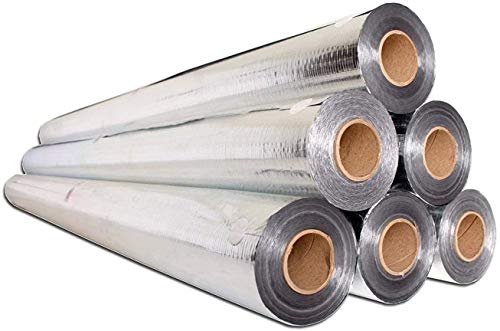
AES emphasizes exceptionally high reflectivity, with a stated >99.7% reflective value for its foil. The 1,000-square-foot roll matches the standard size of other products at 250 feet long by 4 feet wide, designed for straightforward DIY installation with standard tools. The roll is described as tear-resistant and capable of withstanding heavy handling without wrinkling excessively. Like others, it is non-toxic and does not promote mold growth or pest nesting, supporting use in new builds or retrofits without ongoing maintenance requirements.
Readers should consider how the foil’s thin profile interacts with existing insulation layers and ventilation strategies. With such high reflectivity, this option may provide strong heat-blocking performance, though actual gains will depend on attic layout, climate, and installation quality. This product positions itself as a high-performance choice for homeowners prioritizing maximum radiant heat reduction.
RadiantGUARD 500 Sq Ft Roll

The 500-square-foot RadiantGUARD roll is a lighter, perforated option designed for smaller attic spaces or retrofit projects where full-roll coverage isn’t necessary. It emphasizes its ability to reduce radiant heat transfer by roughly 95% and notes a DIY-friendly installation approach. The product is presented as a practical choice for homeowners who want a balance between performance and ease of handling, with perforations aiding moisture management in certain attic environments. It is billed as compatible with existing insulation systems and suitable for various climate regions.
Considerations for this option include ensuring adequate overlap with surrounding foil layers and confirming that perforations align with ventilation needs. While not as heavy as some commercial-grade rolls, it still delivers notable reflective performance and can be a practical step toward improving attic efficiency without overwhelming install time.
EcoFoil Perforated Radiant Barrier

EcoFoil offers a perforated radiant barrier roll sized at 4’ x 250’ (1,000 sq ft) with tiny perforations designed for attics where a vapor barrier is not needed. The perforations support moisture movement while maintaining high reflective performance, with a stated 96% radiant heat block. The product is described as easy to cut and install using a staple gun, and it is manufactured in the USA. It is positioned as a practical, accessible option for DIY enthusiasts seeking a breathable, perforated barrier that reduces heat transfer in hot climates.
Installers may value the perforation design for moisture control in humid regions, though they should confirm compatibility with local building codes and ventilation practices. The EcoFoil option rounds out the list with a US-made perforated barrier designed for straightforward installation and reliable heat reflection.
Buying Guide: Key Purchase Considerations And Comparisons
When selecting a radiant barrier for a home, consider the following factors to ensure the best fit for climate, attic layout, and budget:
- Reflectivity rating: Higher reflectivity generally yields better heat reduction. Values above 97% are common among premium options; some claim >99.7% reflectivity.
- Perforation and moisture management: Perforated foils allow moisture to escape, reducing condensation risk in humid regions. If a vapor barrier is not needed, perforated variants can be advantageous.
- Weight and stiffness: Heavier, denser rolls (e.g., RadiantGUARD Xtreme) can be more durable but harder to handle; lighter rolls are easier for DIY installations.
- Installation method: Most products are designed to be stapled to attic rafters or under roof sheathing. Plan for overlaps, penetrations around vents, and attic access to maximize coverage.
- Coverage area: Rolls commonly cover 1,000 sq ft per roll; choose quantity based on attic square footage and how many passes you plan to complete.
- Compatibility with existing insulation: Some barriers work best as a complement to existing insulation rather than a stand-alone solution. Consider layering for enhanced performance.
- Durability and chemical compatibility: Look for tear resistance, non-toxicity, and resistance to humidity to minimize post-installation issues.
- Code compliance: Ensure the product meets local building codes and any required certifications for radiant barriers in your area.
In choosing among these options, homeowners should evaluate climate considerations (hot summers, cold winters), attic ventilation, and whether DIY installation aligns with the project timeline. The most effective choice often blends a high-reflectivity barrier with proper attic insulation and ventilation, optimizing energy savings while maintaining indoor comfort.