Choosing the right water flow meter for a residential setting helps homeowners monitor consumption, detect leaks, and optimize irrigation and appliance use. This guide highlights five reliable meters that cover common installation sizes, measurement standards, and materials suitable for cold water systems in homes, apartments, and small gardens. Each entry includes key specs, installation notes, and how it aligns with typical American plumbing installations.
| Product | Brand | Measurement | Connection | Best Use |
|---|---|---|---|---|
| Watflow DN20 Water Meter 3/4″ NPT | Watflow | Gallon (gal) | 3/4″ NPT | Cold water, residential utilities |
| Watflow DN20 Water Meter 3/4″ NPT ISO4064 | Watflow | Cubic Meter | 3/4″ NPT | General household and irrigation |
| MEASUREMAN 3/4″ Non-Pulsed Single-Jet | MEASUREMAN | Gallons | 3/4″ NPT | Garden, RV, residential |
| Watflow DN15 Water Meter 1/2″ NPT | Watflow | Cubic Meter | 1/2″ NPT | Smaller residential lines |
| RESTMO Water Flow Meter with Brass Inlet | Restmo | Liters/Gallons | Brass inlet, standard hose connections | Outdoor garden hose and irrigation |
Watflow DN20 Water Meter 3/4 Inch NPT – AWWA Certified

Watflow’s DN20 water meter uses an eco-brass main case with corrosion resistance and 3/4″ NPT couplings for straightforward integration into typical American residential lines. It measures in gallons, aligning with common U.S. household water usage, and targets a wide flow range. Accuracy is described as ±1.5% within normal flow, with ±3% at low flow. The meter supports continuous high flow up to 20 GPM and a minimum of 0.25 GPM, making it suitable for main water lines to a home, irrigation, or apartment utilities.
Watflow DN20 Water Meter ISO4064 – Cubic Meter Version

This variant shares the same durable eco-brass exterior and 3/4″ NPT connections, but it measures in cubic meters, broadening compatibility for utility monitoring and compliance in various U.S. installations. It emphasizes corrosion-resistant materials and a similar accuracy profile to the DN20 version, with the same high-flow ceiling and low-flow minimum. This makes it a versatile choice for households prioritizing metric-based reporting or multi-meter setups in large properties.
MEASUREMAN 3/4″ Non-Pulsed Single-Jet Gallon Meter

MEASUREMAN’s 3/4″ meter features a single-jet mechanism that provides straightforward, low-maintenance readings in gallons. The simple dial layout promotes quick, accurate monitoring of household water use. Built with a blue-brass body, the unit emphasizes corrosion resistance for long-term performance in cold-water applications, irrigation, or residential water hookups for RVs and stationary setups. The design emphasizes durability and readable measurements for everyday tracking.
Watflow DN15 Water Meter 1/2 Inch NPT – Cubic Meter
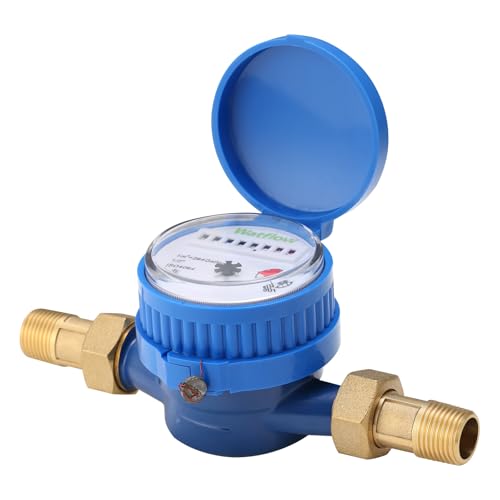
The DN15 variant scales down to 1/2″ NPT for tighter residential lines or smaller lines within apartments. It uses cubic meter measurements and shares the eco-brass corrosion resistance and robust construction. With the same accuracy benchmarks as larger Watflow meters, it delivers reliable readings across typical household water flows and is well-suited for installations where space or pipe size is constrained.
RESTMO Water Flow Meter with Brass Inlet

RESTMO’s meter features a brass inlet and metal threading for durable, easy installation on outdoor hoses, RV tanks, and garden irrigation. An LCD display and multiple modes—flow, consumption, average, and total—enable flexible monitoring of real-time usage and historical data. The rugged brass construction provides confidence in outdoor environments and seasonal temperature changes, making it suitable for off-pipe applications as well.
Buying Guide: Key Purchase Considerations for Residential Water Meters
When selecting a water flow meter for home use, consider size, measurement unit, material, accuracy, and installation compatibility. For many households, meters in the 1/2″ to 3/4″ range are common due to standard plumbing fittings and irrigation lines. If you track usage for utility rebates or compliance, choose meters that report in cubic meters or gallons, depending on local practices. Corrosion resistance, particularly in brass or brass-brass composites, extends service life in cold-water systems. Look for meters with clear dials or LCD displays and low-maintenance components, such as single-jet designs for straightforward maintenance.
Consider where you’ll install the meter: inline on main water lines, on irrigation feeds, or on outdoor hoses. For outdoor use, select waterproof or weather-resistant housings and verify IP ratings if exposed to rain or splashing water. If you need to monitor consumption via a smart home setup, some models offer straightforward integration with external devices or require compatible data interfaces. Finally, evaluate cost against features: higher accuracy, larger flow ranges, and metric versus imperial units should align with your household needs and existing infrastructure.
Additional Considerations: Comparative Perspectives
- Accuracy versus range: Many residential meters offer ±1.5% to ±3% accuracy with peak flow around 20 GPM; evaluate whether low-flow performance matters for your usage patterns (drip irrigation vs. high-use appliances).
- Materials and compatibility: Eco-brass bodies and brass inlets resist corrosion, prolonging life in cold water systems; confirm thread standards (NPT) align with your pipes and fittings.
- Measurement unit preference: Gallon-focused meters suit U.S. residential habits, while cubic meter meters facilitate broader utility reporting or international contexts.
- Maintenance: Simple, non-pulsed designs reduce maintenance needs, but consider readability and the availability of replacement parts.
- Smart monitoring: Some meters pair with digital displays or smart meters, offering real-time insights and leak alerts for proactive water management.